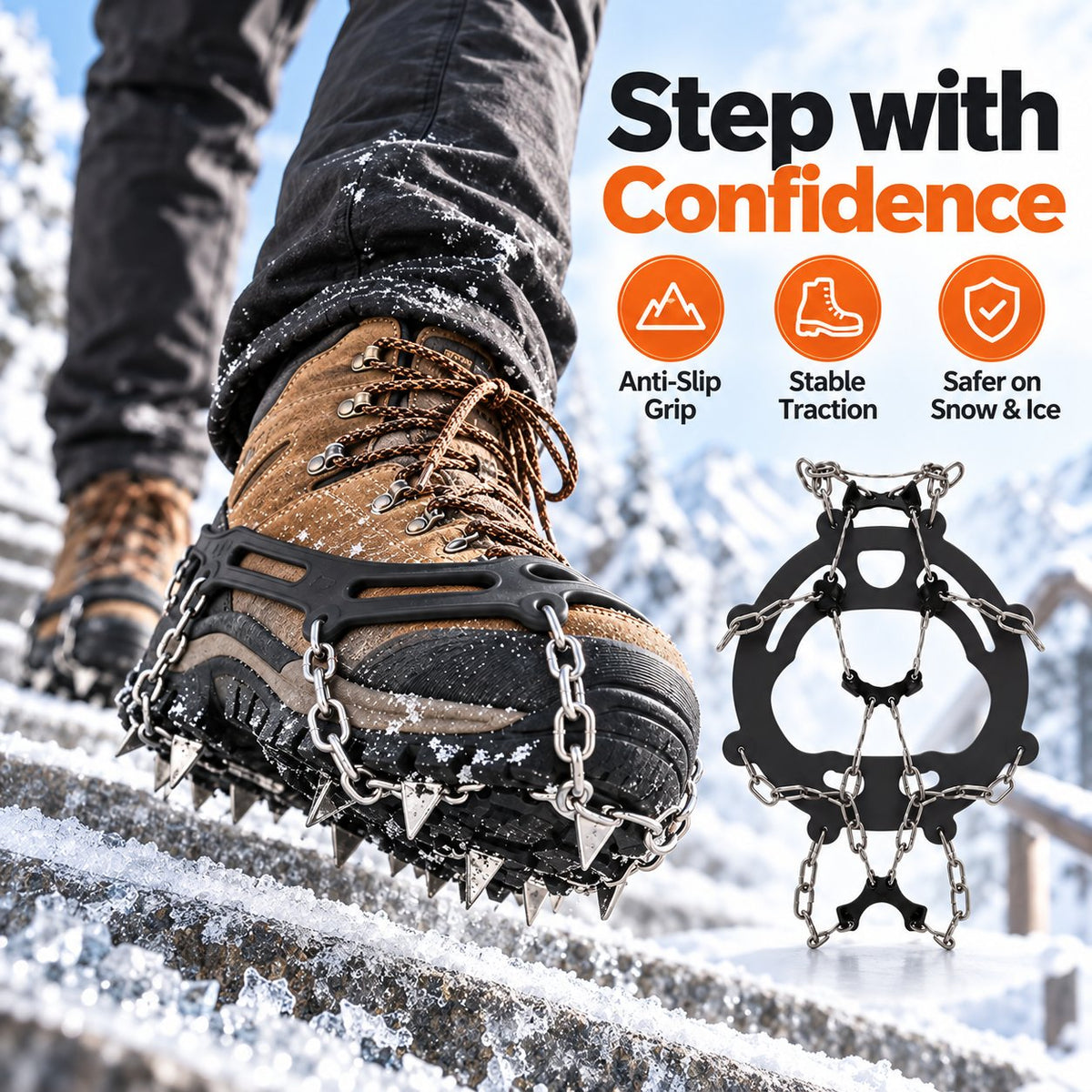
🧗♂️8/10-Tooth Welded Chain Crampons | Non-Slip Snow Ice Grips for Outdoor Hiking❄️
🧗♂️8/10-Tooth Welded Chain Crampons | Non-Slip Snow Ice Grips for Outdoor Hiking❄️

Couldn't load pickup availability
-
Ordered
- - -
Order Ready
- - -
Delivered

🧗♂️8/10-Tooth Welded Chain Crampons | Non-Slip Snow Ice Grips for Outdoor Hiking❄️
❄️ Walk More Confidently on Ice & Snow
Slippery winter surfaces can make every step feel uncertain. These non-slip ice cleats add extra traction beneath your footwear with steel chains and high-grip teeth, helping you feel more secure when walking on icy, snowy, or packed winter surfaces.
😩 Tired of Slipping on Winter Surfaces?
Ice and packed snow can turn ordinary walking into a challenge.
- 🧊 Smooth ice can provide very little natural traction.
- ❄️ Packed snow can become slippery underfoot.
- 🥾 Ordinary footwear may not provide enough grip for changing winter conditions.
- 🔧 Bulky traction equipment can be inconvenient to put on and remove.

💪 Built for Winter Traction
⛓️ Strong Steel Chains
Welded steel chains are designed to withstand regular use on snowy and icy outdoor surfaces.
🦷 High-Grip Teeth
High-hardness steel teeth provide multiple contact points to help improve traction on slippery surfaces.
❄️ Cold-Resistant Material
The flexible TPR-style outer band is designed to remain elastic in cold weather conditions.
🥾 Easy Slip-On Design
Stretch the traction cleats over your footwear without removing your shoes first.

⛓️ Steel Chain + Aggressive Grip
The traction system combines 201 stainless steel chain components with high-strength steel teeth to create multiple gripping points beneath your footwear.
TPR Rubber: Flexible outer structure designed for easy stretching over footwear.
201 Steel Chain: Provides a durable traction framework.
Steel Teeth: Help bite into snow and icy surfaces for additional grip.

🔄 From Slippery Steps to Added Traction
Before
Smooth winter surfaces and ordinary footwear can make each step feel less stable.
After
Add a layer of traction beneath your shoes to help improve grip on icy and snowy surfaces.

💡 Why Choose These Ice Cleats?
- Durable Steel Construction: Built with steel chains and high-strength traction teeth for repeated winter use.
- Multiple Grip Points: The chain-and-tooth structure provides traction across the sole of your footwear.
- Flexible Fit: The elastic outer band stretches over different types of footwear.
- Cold-Weather Ready: Designed with materials intended for use in freezing conditions.
- Quick to Put On: Slip them over your shoes in just a few simple movements.
- Portable: Easy to keep in your car, backpack, or outdoor gear bag for changing weather conditions.
🥾 How to Put Them On
- Place the front of the cleat over the toe of your shoe.
- Stretch the flexible band around the heel.
- Adjust the chains and teeth so they sit evenly beneath the sole.
- Check that the cleat is securely positioned before walking.
Safety tip: Use appropriate caution on stairs, smooth indoor floors, bare pavement, and other surfaces where metal traction teeth may reduce stability or potentially damage the surface.

🏔️ Made for Winter Adventures
Winter Hiking
Snow Walking
Outdoor Trails
Ice Fishing
Winter Walking
Everyday Winter Use
🦷 Choose Your Traction Level
Available in 8-tooth and 10-tooth configurations, allowing you to choose the traction setup that best matches your outdoor needs. The product page currently lists both options.
“They are easy to stretch over my boots and give me extra grip when walking on snowy paths.”
“The chains feel sturdy and the cleats are convenient to keep in the car during winter.”
“Much easier to put on than bulky winter traction gear. They work well for my outdoor walks.”
❓ Frequently Asked Questions
What are these ice cleats made of?
The product uses a TPR rubber outer band, 201 steel chain, and high-strength steel traction teeth.
Will they fit different types of shoes?
The flexible slip-on structure is designed to stretch over various footwear, including sneakers, hiking shoes, work boots, and snow boots. Always check the available size option before ordering.
Are they suitable for cold weather?
Yes. The flexible outer material is designed for cold-weather use and is intended to remain elastic in low temperatures.
Are they easy to put on?
Yes. The slip-on design allows you to place the front over the toe and then stretch the band around the heel.
Can I wear them indoors?
They are primarily designed for outdoor snow and ice conditions. Avoid wearing metal-tooth traction cleats on delicate indoor flooring or surfaces where the teeth could cause damage.
Are they suitable for every icy surface?
They are designed to improve traction on snow and ice, but no traction device can eliminate the risk of slipping. Walk carefully and adjust your pace according to surface conditions.
📦 Product Details
Product Type: Non-Slip Ice Cleats
Traction Options: 8-Tooth / 10-Tooth
Outer Material: TPR Rubber
Chain Material: 201 Steel
Traction Teeth: High-Strength Steel
Design: Slip-On
Use: Snow, Ice & Winter Outdoor Activities
❄️ Be Ready for Winter Conditions
Add extra traction to your winter footwear and step into snowy and icy conditions with greater confidence.